At a Glance
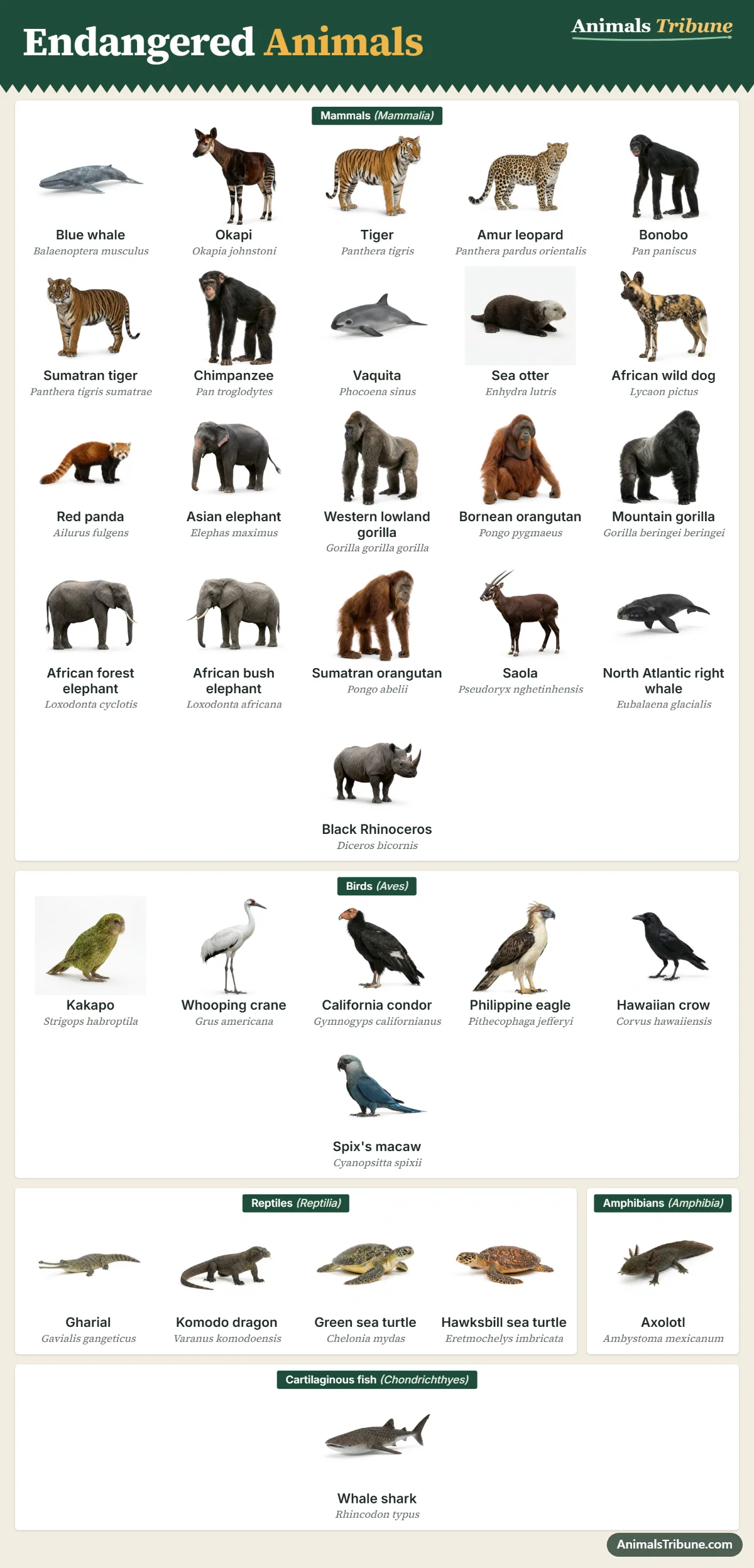
Endangered animals include the tiger, blue whale, Asian elephant, African bush elephant, chimpanzee, bonobo, red panda, sea otter, African wild dog, Komodo dragon, whale shark and green sea turtle. Critically endangered animals include the vaquita, Amur leopard, Sumatran tiger, black rhinoceros, Bornean and Sumatran orangutans, western lowland gorilla, African forest elephant, kakapo, California condor, gharial, hawksbill sea turtle and axolotl.
- What endangered means
- Very high risk of extinction in the wild
- Species on our site at risk
- 143 endangered, critically endangered or extinct in the wild
- Group with most at-risk species
- Mammals, 73 of the 143
- Rarest marine mammal
- Vaquita, a tiny porpoise of Mexico
- Biggest endangered animal
- Blue whale
- Main threat
- Habitat loss
On this page
- Infographic
- What Does Endangered Mean?
- Endangered Animals List
- In numbers
- Critically Endangered Animals
- Endangered Mammals: Tigers, Elephants, Apes and Whales
- Endangered Birds, Reptiles, Amphibians and Fish
- Endangered Animals in Africa
- Endangered Animals in North America and the US
- Why Do Animals Become Endangered?
- Conservation Success Stories and How to Help
- The full list
- Key Facts
- Quiz
- FAQ
What Does Endangered Mean?
Scientists sort wild species into risk levels based on how many animals are left, how fast their numbers are falling and how small their range is. An endangered species faces a very high risk of extinction in the wild. Critically endangered is one step worse, an extremely high risk, and extinct in the wild means the animal survives only in zoos, breeding centers or other human care. Vulnerable and near threatened species are at lower, but still real, risk. You can read more in our glossary entry on endangered species.
Countries also keep their own lists. In the United States, the Endangered Species Act protects species listed as endangered or threatened within the country, so an animal can be endangered under US law while doing better elsewhere in the world, or the other way round.
Endangered Animals List
The animals below are grouped by risk level, starting with the most threatened. Each status is the global assessment shown on that animal's page.
Extinct in the wild: Hawaiian crow, Spix's macaw.
Critically endangered: vaquita, Amur leopard, Sumatran tiger, black rhinoceros, Bornean orangutan, Sumatran orangutan, western lowland gorilla, African forest elephant, North Atlantic right whale, saola, kakapo, California condor, Philippine eagle, gharial, hawksbill sea turtle, axolotl.
Endangered: tiger, blue whale, Asian elephant, African bush elephant, chimpanzee, bonobo, mountain gorilla, red panda, sea otter, African wild dog, Komodo dragon, whale shark, green sea turtle.
| Animal | Status | Where it lives | Main threat |
|---|---|---|---|
| Vaquita | Critically endangered | Northern Gulf of California, Mexico | Gillnets |
| Amur leopard | Critically endangered | Russian Far East and northeast China | Habitat loss, poaching |
| Black rhinoceros | Critically endangered | Eastern and southern Africa | Poaching for horn |
| Bornean orangutan | Critically endangered | Borneo | Forest loss |
| Kakapo | Critically endangered | Islands of New Zealand | Introduced predators |
| Axolotl | Critically endangered | Mexico City canals | Pollution, habitat loss |
| Tiger | Endangered | South and Southeast Asia, Russian Far East | Habitat loss, poaching |
| Blue whale | Endangered | Oceans worldwide | Past whaling, ship strikes |
| Asian elephant | Endangered | South and Southeast Asia | Habitat loss, conflict |
| Red panda | Endangered | Himalayas and southwest China | Forest loss |
| Green sea turtle | Endangered | Tropical oceans | Bycatch, beach loss |
| Hawaiian crow | Extinct in the wild | Hawaii, in captivity | Disease, predators |
| Source: Status as shown on each animal's page; threats summarized by our editors · Retrieved October 2026 | |||


Endangered Animals in Numbers
| Animals on this page | 33 |
|---|---|
| Classes | Aves (birds), Mammalia (mammals), Reptilia (reptiles), Amphibia (amphibians), Chondrichthyes (cartilaginous fish) |
| Orders | 14 |
| Families | 23 |
| Conservation status labels | Critically Endangered: 16, Endangered: 15, Extinct In The Wild: 2 |
| At-risk species with our pages | 143 (endangered, critically endangered or extinct in the wild) |
| At-risk mammals with our pages | 73 (the largest group) |
| At-risk reptiles and birds | 23 reptiles, 24 birds (species with our pages) |
Sources: Wikidata
Critically Endangered Animals
The vaquita is the most endangered marine mammal. This small porpoise lives only in the northern Gulf of California in Mexico, and recent surveys suggest only about 10 remain. They drown in gillnets set for a large fish whose swim bladder is sold illegally.
Big cats and apes fill much of the critically endangered list. The Amur leopard of the Russian Far East and northeastern China clings on in a small strip of forest. The Sumatran tiger, both orangutans and the western lowland gorilla are losing forest to logging, farming and plantations, and they are also hunted.
The black rhinoceros was nearly wiped out by poaching for its horn and survives today largely because of armed protection. The saola, a forest antelope of Vietnam and Laos discovered by scientists only in 1992, has almost never been seen alive. In fresh water, the gharial, a fish-eating crocodile of India and Nepal, and the axolotl, a salamander found in the wild only in the canals of Mexico City, are both critically endangered.


Endangered Mammals: Tigers, Elephants, Apes and Whales
Mammals make up 73 of the 143 at-risk species on our site. Large mammals are especially vulnerable because they need big territories, breed slowly and are often hunted.
- Tiger: the largest cat, now gone from most of its former range across Asia. Subspecies such as the Bengal tiger and Siberian tiger depend on protected reserves.
- Elephants: the Asian elephant and African bush elephant are endangered, and the African forest elephant is critically endangered, mainly because of ivory poaching and conflict with farmers.
- Great apes: the chimpanzee, bonobo and mountain gorilla are endangered, losing forest and suffering from hunting and disease.
- Whales: the blue whale, the largest animal that has ever lived, and the sei whale are still recovering from commercial whaling.
- Smaller mammals: the red panda, sea otter, African wild dog, Tasmanian devil, numbat, golden lion tamarin and okapi.


Endangered Birds, Reptiles, Amphibians and Fish
Birds: the flightless kakapo of New Zealand survives only on predator-free islands. The California condor fell to fewer than 30 birds in the 1980s before every last wild bird was taken into captivity to breed. The whooping crane, African penguin, Philippine eagle, grey parrot and kea are also at risk.
Reptiles: sea turtles such as the green, hawksbill and Kemp's ridley drown in fishing gear and lose nesting beaches. The Komodo dragon, radiated tortoise and Chinese alligator are other examples.
Amphibians and fish: amphibians are the most threatened class of backboned animals worldwide, hit by a deadly fungal disease as well as habitat loss. The Chinese giant salamander and the goliath frog are on the list. In the sea, the whale shark, oceanic whitetip, scalloped hammerhead and the beluga sturgeon have been overfished.


Endangered Animals in Africa
Africa is home to many of the world's best-known endangered animals. The black rhinoceros and African forest elephant are critically endangered, as are the western lowland gorilla of the Congo Basin and the addax, a desert antelope of the Sahara with long, spiraled horns. The mountain gorilla, African wild dog, Ethiopian wolf, Grevy's zebra, okapi, chimpanzee and bonobo are endangered.
Madagascar, an island off Africa's east coast, has its own crisis. Nearly all of its lemurs are threatened, including the ring-tailed lemur and the critically endangered indri and red ruffed lemur, along with the radiated tortoise. On the coasts, the African penguin has declined sharply as the small fish it eats have become scarce.
Endangered Animals in North America and the US
North America has its own list of species on the edge. The North Atlantic right whale is critically endangered, killed mainly by ship strikes and entanglement in fishing ropes. The vaquita lives only in Mexico. The California condor, whooping crane and black-footed ferret were all close to extinction and were saved by captive breeding and releases.
Under US law, the red wolf of North Carolina, the Florida panther and the Hawaiian monk seal are protected as endangered. Turtles are also at risk: the Kemp's ridley sea turtle nests mainly on beaches in Mexico and Texas, and the desert tortoise, wood turtle and spotted turtle have declined with the loss of their habitats. In the Great Lakes region, the ancient lake sturgeon is endangered too.
Why Do Animals Become Endangered?
- Habitat loss: forests, grasslands and wetlands are turned into farms, towns, roads and mines. This is the biggest threat to most species.
- Hunting and poaching: animals are killed for meat, horns, ivory, skins, scales and traditional medicine, or captured for the pet trade.
- Overfishing and bycatch: sharks, sturgeons, turtles, porpoises and seabirds are caught deliberately or by accident in nets and on lines.
- Invasive species: rats, cats, stoats and other introduced predators wipe out island birds and reptiles that never evolved defenses.
- Disease: a fungal disease has devastated frogs and salamanders worldwide, and a contagious facial cancer has hit the Tasmanian devil.
- Climate change and pollution: warming seas, melting ice, plastics and pesticides add pressure on top of everything else.
Conservation Success Stories and How to Help
Extinction is not inevitable. The California condor now flies again over California, Arizona and Mexico. The mountain gorilla has increased thanks to strict protection and tourism that pays for rangers. Humpback whales and many other whales have rebounded since commercial whaling was banned, and the black-footed ferret, once thought extinct, now lives again on prairies where it was released.
Everyone can help. Choose sustainable seafood, avoid products made from wild animals, never buy exotic pets taken from the wild, plant native plants that feed local wildlife, keep cats indoors, and support zoos, aquariums and conservation groups that protect habitats. Learning about endangered animals and sharing what you learn matters too. Teachers can find a classroom version on our endangered animals for kids page.
Endangered Animals on Our Site (33)
Each animal below has its own page with its conservation status, range and more facts. The list starts with the most threatened.
 Hawaiian crowCorvus hawaiiensisExtinct in the wild
 Spix's macawCyanopsitta spixiiExtinct in the wild, being reintroduced
 VaquitaPhocoena sinusCritically endangered porpoise
 Amur leopardPanthera pardus orientalisCritically endangered big cat
 Sumatran tigerPanthera tigris sumatraeCritically endangered tiger
 Black RhinocerosDiceros bicornisCritically endangered rhino
 Bornean orangutanPongo pygmaeusCritically endangered ape
 Sumatran orangutanPongo abeliiCritically endangered ape
 Western lowland gorillaGorilla gorilla gorillaCritically endangered gorilla
 African forest elephantLoxodonta cyclotisCritically endangered elephant
 North Atlantic right whaleEubalaena glacialisCritically endangered whale
 SaolaPseudoryx nghetinhensisCritically endangered forest antelope
 KakapoStrigops habroptilaCritically endangered parrot
 California condorGymnogyps californianusCritically endangered vulture
 Philippine eaglePithecophaga jefferyiCritically endangered eagle
 GharialGavialis gangeticusCritically endangered crocodile
 Hawksbill sea turtleEretmochelys imbricataCritically endangered sea turtle
 AxolotlAmbystoma mexicanumCritically endangered salamander
 TigerPanthera tigrisEndangered big cat
 Blue whaleBalaenoptera musculusEndangered, largest animal ever
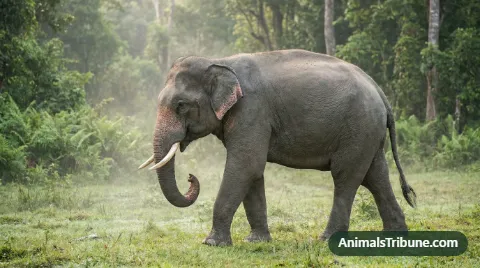 Asian elephantElephas maximusEndangered elephant
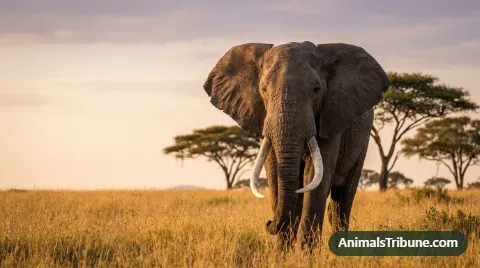 African bush elephantLoxodonta africanaEndangered elephant
 ChimpanzeePan troglodytesEndangered ape
 BonoboPan paniscusEndangered ape
 Mountain gorillaGorilla beringei beringeiEndangered, slowly recovering
 Red pandaAilurus fulgensEndangered mountain mammal
 Sea otterEnhydra lutrisEndangered marine mammal
 African wild dogLycaon pictusEndangered pack hunter
 OkapiOkapia johnstoniEndangered forest giraffe relative
 Komodo dragonVaranus komodoensisEndangered giant lizard
 Whale sharkRhincodon typusEndangered, biggest fish
 Green sea turtleChelonia mydasEndangered sea turtle
 Whooping craneGrus americanaEndangered crane
| Hawaiian crow | Corvus hawaiiensis | Corvidae | n/a | n/a | Extinct In The Wild |
|---|---|---|---|---|---|
| Spix's macaw | Cyanopsitta spixii | Psittacidae | n/a | n/a | Extinct In The Wild |
| Vaquita | Phocoena sinus | Phocoenidae | n/a | n/a | Critically Endangered |
| Amur leopard | Panthera pardus orientalis | Felidae | n/a | n/a | Critically Endangered |
| Sumatran tiger | Panthera tigris sumatrae | Felidae | n/a | n/a | Critically Endangered |
| Black Rhinoceros | Diceros bicornis | Rhinocerotidae | n/a | n/a | Critically Endangered |
| Bornean orangutan | Pongo pygmaeus | Hominidae | n/a | n/a | Critically Endangered |
| Sumatran orangutan | Pongo abelii | Hominidae | n/a | n/a | Critically Endangered |
| Western lowland gorilla | Gorilla gorilla gorilla | Hominidae | n/a | n/a | Critically Endangered |
| African forest elephant | Loxodonta cyclotis | Elephantidae | n/a | n/a | Critically Endangered |
| North Atlantic right whale | Eubalaena glacialis | Balaenidae | n/a | n/a | Critically Endangered |
| Saola | Pseudoryx nghetinhensis | Bovidae | n/a | n/a | Critically Endangered |
| Kakapo | Strigops habroptila | Strigopidae | n/a | n/a | Critically Endangered |
| California condor | Gymnogyps californianus | Cathartidae | n/a | 8.5 kg | Critically Endangered |
| Philippine eagle | Pithecophaga jefferyi | Accipitridae | n/a | n/a | Critically Endangered |
| Gharial | Gavialis gangeticus | Gavialidae | n/a | n/a | Critically Endangered |
| Hawksbill sea turtle | Eretmochelys imbricata | Cheloniidae | n/a | n/a | Critically Endangered |
| Axolotl | Ambystoma mexicanum | Ambystomatidae | 45.7 cm | 227 g | Critically Endangered |
| Tiger | Panthera tigris | Felidae | n/a | 120–180 kg | Endangered |
| Blue whale | Balaenoptera musculus | Balaenopteridae | 27.1 m | n/a | Endangered |
| Asian elephant | Elephas maximus | Elephantidae | n/a | n/a | Endangered |
| African bush elephant | Loxodonta africana | Elephantidae | n/a | n/a | Endangered |
| Chimpanzee | Pan troglodytes | Hominidae | n/a | n/a | Endangered |
| Bonobo | Pan paniscus | Hominidae | n/a | 33–43 kg | Endangered |
| Mountain gorilla | Gorilla beringei beringei | Hominidae | n/a | n/a | Endangered |
| Red panda | Ailurus fulgens | Ailuridae | n/a | 5 kg | Endangered |
| Sea otter | Enhydra lutris | Mustelidae | 1.4–1.48 m | 32.5–45 kg | Endangered |
| African wild dog | Lycaon pictus | Canidae | n/a | n/a | Endangered |
| Okapi | Okapia johnstoni | Giraffidae | n/a | 250 kg | Endangered |
| Komodo dragon | Varanus komodoensis | Varanidae | 2–3 m | 70 kg | Endangered |
| Whale shark | Rhincodon typus | Rhincodontidae | 14 m | 12,000 kg | Endangered |
| Green sea turtle | Chelonia mydas | Cheloniidae | n/a | n/a | Endangered |
| Whooping crane | Grus americana | Gruidae | n/a | 7.5 kg | Endangered |
| Sources: Wikidata | |||||
Key Facts
- An endangered species has a very high risk of extinction in the wild.
- 143 species with pages on our site are endangered, critically endangered or extinct in the wild.
- Mammals make up 73 of those 143 species.
- The vaquita is the most endangered marine mammal, with only about 10 thought to remain.
- Habitat loss is the biggest threat to endangered animals.
- The California condor fell to fewer than 30 birds before captive breeding saved it.
Quick Quiz: How Well Do You Know the Endangered Animals?
6 questions. Tap an answer to check it.
What does extinct in the wild mean?
The Hawaiian crow and Spix's macaw survive in human care.
Which is the most endangered marine mammal?
Only about 10 vaquitas are thought to remain.
What is the biggest threat to endangered animals?
Losing forests, grasslands and wetlands harms the most species.
Which animal group has the most at-risk species on our site?
Mammals make up 73 of the 143.
Which bird was saved by catching every wild one for breeding?
All wild condors were taken into care in 1987.
Where does the axolotl live in the wild?
Wild axolotls survive only in a few canals in Mexico City.
Frequently Asked Questions
What are some endangered animals?
The tiger, blue whale, Asian elephant, African bush elephant, chimpanzee, bonobo, mountain gorilla, red panda, sea otter, African wild dog, Komodo dragon, whale shark and green sea turtle are all endangered.
What is the most endangered animal in the world?
The vaquita, a small porpoise of Mexico's Gulf of California, is often named the most endangered mammal, with only about 10 thought to remain.
What endangered animals live in Africa?
The black rhinoceros, African forest and bush elephants, mountain and western lowland gorillas, chimpanzee, bonobo, African wild dog, Ethiopian wolf, Grevy's zebra, okapi, addax, African penguin and many lemurs of Madagascar.
What endangered animals live in the US?
The North Atlantic right whale, California condor, whooping crane, black-footed ferret, red wolf, Florida panther, Hawaiian monk seal, Kemp's ridley sea turtle and lake sturgeon are among them.
What is the difference between endangered and critically endangered?
Endangered means a very high risk of extinction in the wild. Critically endangered means an extremely high risk, the last level before a species is extinct in the wild.
Why do animals become endangered?
Mostly because of habitat loss, followed by hunting and poaching, overfishing, invasive species, disease, pollution and climate change.
Can endangered animals recover?
Yes. The California condor, black-footed ferret, mountain gorilla and many whales have increased thanks to protection, captive breeding and habitat restoration.
How can I help endangered animals?
Choose sustainable seafood, avoid wildlife products and wild-caught pets, plant native plants, keep cats indoors, and support conservation groups and accredited zoos.