At a Glance
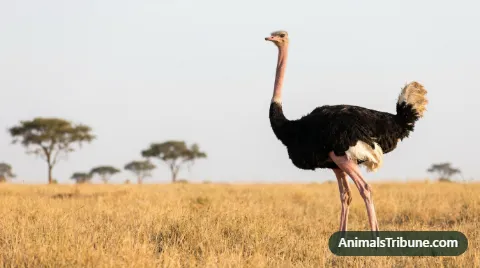
The peregrine falcon is the fastest bird on Earth, diving at about 320 km/h (200 mph). The golden eagle dives at about 240 km/h (150 mph). For level flight, a grey-headed albatross tracked in a storm averaged about 127 km/h (79 mph) with a strong tailwind, and the common swift reaches about 110 km/h (70 mph) under its own power. The fastest bird on land is the ostrich, at about 70 km/h (43 mph).
- Fastest bird overall
- Peregrine falcon, about 320 km/h (200 mph) in a dive
- Fastest in level flight
- Common swift, about 110 km/h (70 mph)
- Fastest with a tailwind
- Grey-headed albatross, about 127 km/h (79 mph)
- Fastest on land
- Ostrich, about 70 km/h (43 mph)
- Fastest for its size
- Anna's hummingbird in its courtship dive
- Fastest swimming bird
- Gentoo penguin, about 35 km/h (22 mph)

On this page
- Infographic
- What Is the Fastest Bird in the World?
- In numbers
- Fastest Birds Ranked by Top Speed
- Fastest Diving Birds and Birds of Prey
- Fastest Birds in Level Flight
- Fastest Birds on Land
- Fastest Birds in North America
- Fastest Birds for Their Size
- How Is Bird Speed Measured?
- Speed Myths and Honorable Mentions
- The full list
- Key Facts
- Quiz
- FAQ
What Is the Fastest Bird in the World?
The peregrine falcon is the fastest bird, and the fastest animal of any kind. When it spots a pigeon or duck far below, it climbs high, folds its wings tight against its body and drops in a steep dive called a stoop. In that dive it reaches about 320 km/h (200 mph), and a trained falcon diving beside a skydiver was once clocked at about 390 km/h (242 mph). It strikes its prey in midair with its feet, often killing it instantly.
A dive uses gravity, though, so it is not the whole story. If you only count flapping flight, swifts are the champions. If you count gliding with the wind, albatrosses can cover huge distances at very high speed. And if you only count running, the flightless ostrich leaves every other bird behind. The ranked list below separates these kinds of speed so that each record makes sense.

Fastest Birds in the World in Numbers
| Animals on this page | 17 |
|---|---|
| Class | Aves (birds) |
| Orders | 11 |
| Families | 12 |
| Conservation status labels | Least Concern: 12, Endangered: 1, Vulnerable: 1 |
| Peregrine falcon dive | About 320 km/h (200 mph) (commonly accepted value, our editors) |
| Common swift level flight | About 110 km/h (70 mph) (radar measurement, our editors) |
| Ostrich running speed | About 70 km/h (43 mph) (typical top sprint, our editors) |
Sources: Wikidata
Fastest Birds Ranked by Top Speed
This table ranks the fastest birds by their best widely accepted top speed and says how that speed is reached. All values are rounded, because speeds vary with wind, slope, the individual bird and the way they were measured. The chart compares the same birds side by side.
| Bird | Top speed (about) | How the speed is reached | Measurement note |
|---|---|---|---|
| Peregrine falcon | 320 km/h (200 mph) | Hunting dive | Video and radar timing of dives |
| Golden eagle | 240 km/h (150 mph) | Hunting dive | Estimates from filmed dives |
| Grey-headed albatross | 127 km/h (79 mph) | Gliding in a storm | GPS tracking, strong tailwind |
| Common swift | 110 km/h (70 mph) | Level flapping flight | Radar during group chases |
| Anna's hummingbird | 98 km/h (61 mph) | Courtship dive | High-speed video |
| Racing pigeon (rock dove) | 80 to 100 km/h (50 to 60 mph) | Level flight | Race timing, often with wind |
| Ostrich | 70 km/h (43 mph) | Running sprint | Field and vehicle timing |
| Rhea | 60 km/h (37 mph) | Running | Field estimates |
| Emu | 50 km/h (31 mph) | Running | Field and vehicle timing |
| Gentoo penguin | 35 km/h (22 mph) | Swimming burst | Underwater observations |
| Greater roadrunner | 30 km/h (19 mph) | Running | Field estimates |
| Source: commonly accepted values, our editors · Retrieved October 2026 | |||

Fastest Diving Birds and Birds of Prey
Birds of prey own the top of the speed rankings because they hunt by diving. The peregrine falcon has special features for this: stiff, pointed wings, a streamlined body, extra-strong chest muscles and small bony cones in its nostrils that are thought to slow the rush of air so that it can keep breathing at full speed. A clear third eyelid sweeps across the eye to keep it clean and moist during the stoop.
- Golden eagle: dives at about 240 km/h (150 mph) when it stoops on hares, grouse and marmots. It is much heavier than a falcon, and that weight helps it build speed in a long, steep drop.
- Gyrfalcon: the largest falcon is famous among falconers for its power in level chases as well as in dives. Reliable top speeds are hard to find, so we do not give a number.
- Saker falcon and prairie falcon: large falcons of dry open country that chase birds and ground squirrels in fast, low flights and steep stoops.
- Merlin: a small, fierce falcon that catches songbirds in dashing, twisting chases rather than long dives.
Dives are where the biggest numbers come from, but they are also the hardest to measure, which is why figures for eagles and the larger falcons vary widely from one source to the next.


Fastest Birds in Level Flight
Level flight is a fairer test of raw flying power, because the bird is not falling. The common swift holds one of the best-measured records: radar tracked swifts at about 110 km/h (70 mph) during screaming chases over their nesting sites. Swifts spend almost their whole lives in the air, feeding, drinking and even sleeping on the wing, and some stay airborne for ten months at a time.
- Albatrosses: a grey-headed albatross fitted with a tracker held an average of about 127 km/h (79 mph) for hours while riding a storm in the Southern Ocean. That is the fastest sustained level speed known for a bird, but the strong wind behind it did much of the work. Albatrosses like the wandering albatross barely flap at all, gliding on air currents above the waves.
- Racing pigeons (rock dove): trained homing pigeons often average about 80 to 100 km/h (50 to 60 mph) in races, especially with a tailwind, and keep that pace for hours.
- Ducks and geese: fast diving ducks such as the canvasback and the common merganser are often said to fly at about 90 to 110 km/h, but careful measurements are rare.


Fastest Birds on Land
Some of the fastest runners in the bird world cannot fly at all. The ostrich of Africa is the fastest bird on land and the fastest two-legged animal alive, reaching about 70 km/h (43 mph) in a sprint and holding about 50 km/h (31 mph) for longer distances. Each stride can cover several meters, and each foot has only two toes, one of them a huge, hoof-like main toe that acts like a running spike. The common ostrich page has more on how it runs.
- Rhea: the big flightless bird of the South American grasslands can run at about 60 km/h (37 mph) and zigzags sharply to escape predators, using its wings like rudders.
- Emu: the Australian giant runs at about 50 km/h (31 mph) and can keep going for long distances.
- Greater roadrunner: the fastest running bird that can also fly, at about 30 km/h (19 mph), quick enough to snatch lizards and even small rattlesnakes.
Underwater, the gentoo penguin is usually named the fastest swimming bird, reaching about 35 km/h (22 mph) in short bursts while chasing krill and fish.


Fastest Birds in North America
North America has most of the world's speed champions within its borders. Peregrine falcons now nest on skyscrapers, bridges and cliffs from Alaska to Mexico, so many city dwellers can watch the fastest animal on Earth hunt pigeons downtown. Golden eagles stoop over the mountains and plains of the West, and in winter the Arctic gyrfalcon sometimes reaches the northern states.
- Prairie falcon and merlin: two fast falcons of the West and the North that chase birds in level flight.
- Canvasback: a fast diving duck of prairie marshes, often named the fastest North American duck.
- Chimney swift: a cigar-shaped aerial insect hunter that roosts in chimneys and is a close relative of the common swift.
- Anna's hummingbird: the West Coast hummingbird whose courtship dive is one of the fastest moves of any animal for its size.
- Greater roadrunner: the fastest running bird on the continent, a desert cuckoo of the Southwest.
Fastest Birds for Their Size
Measured against body length, the tiny male Anna's hummingbird beats the falcons. To impress a female, he climbs up to about 30 m, then dives in a steep U-shaped swoop, reaching about 98 km/h (61 mph) at the bottom. That equals about 385 body lengths every second, more than a diving peregrine and more than a fighter jet at full speed relative to its size. At the bottom of the dive he spreads his tail, and the air rushing through the outer tail feathers makes a sharp chirp.
Small falcons and swifts also score highly for their size. By contrast, the ostrich is fast but very large, so its speed in body lengths per second is far lower than its raw speed suggests.
How Is Bird Speed Measured?
Timing a bird is harder than timing a runner. Researchers use several methods:
- Radar: tracking radar follows flying birds and gives reliable level-flight speeds, as with swifts.
- GPS trackers: tiny devices record a bird's position many times per minute, which revealed the albatross's storm speeds.
- High-speed video: cameras film a dive frame by frame, used for hummingbird and falcon dives.
- Skydiver and aircraft tests: trained falcons have been filmed diving beside skydivers and small planes with known speeds.
Wind is the biggest problem. A bird flying with a strong tailwind can seem to set a record that it could never reach in still air, so scientists try to report airspeed, the speed of the bird through the air, instead of ground speed. That is why we give rounded values and say whether each speed is a dive, level flight, a run or a swim.
Speed Myths and Honorable Mentions
The white-throated needletail, a large swift of Asia and Australia, is often listed at about 170 km/h (105 mph). That figure comes from old observations that were never confirmed with modern equipment, so most scientists treat it as unproven, although the needletail is certainly very fast. Claims of geese and ducks flying faster than cars on a highway often include strong tailwinds too.
Other fast birds worth knowing include the bald eagle, which dives quickly onto fish; the frigatebird, which glides fast over tropical seas; and the Amur falcon, which is not the fastest flier but crosses the Indian Ocean on one of the longest migrations of any bird of prey. For speed records across the whole animal kingdom, see our fastest animals list.
The Fastest Birds on Our Site (17)
Each bird below has its own page with size, range and more facts. Speeds are rounded top values; birds without a reliable measured top speed show no value.
 Peregrine falconFalco peregrinusAbout 320 km/h in a dive
 Golden eagleAquila chrysaetosAbout 240 km/h in a dive
 AlbatrossDiomedeidaeAbout 127 km/h gliding with a storm wind
 Common swiftApus apusAbout 110 km/h in level flight
 Anna's hummingbirdCalypte annaAbout 98 km/h in a courtship dive
 Rock doveColumba liviaAbout 80 to 100 km/h as a racing pigeon
 OstrichStruthioAbout 70 km/h, fastest on land
 RheaRheaAbout 60 km/h, zigzag runner
 EmuDromaius novaehollandiaeAbout 50 km/h, long-distance runner
 Gentoo penguinPygoscelis papuaAbout 35 km/h, fastest swimmer
 Greater roadrunnerGeococcyx californianusAbout 30 km/h, fastest flying bird on foot
 GyrfalconFalco rusticolusLargest falcon, top speed not reliably measured
 Saker falconFalco cherrugFast steppe falcon, speed not reliably measured
 Prairie falconFalco mexicanusFast western falcon
 MerlinFalco columbariusSmall falcon of twisting chases
 Chimney swiftChaetura pelagicaFast aerial insect hunter
 CanvasbackAythya valisineriaOften named the fastest North American duck
| Peregrine falcon | Falco peregrinus | Falconidae | n/a | Least Concern | 320 |
|---|---|---|---|---|---|
| Golden eagle | Aquila chrysaetos | Accipitridae | 3.6–5.2 kg | Least Concern | 240 |
| Albatross | Diomedeidae | Diomedeidae | n/a | n/a | 127 |
| Common swift | Apus apus | Apodidae | n/a | Least Concern | 110 |
| Anna's hummingbird | Calypte anna | Trochilidae | 4 g | Least Concern | 98 |
| Rock dove | Columba livia | Columbidae | 267–294 g | Least Concern | 90 |
| Ostrich | Struthio | Struthionidae | n/a | n/a | 70 |
| Rhea | Rhea | Rheidae | n/a | n/a | 60 |
| Emu | Dromaius novaehollandiae | Casuariidae | 32.7–38.3 kg | Least Concern | 50 |
| Gentoo penguin | Pygoscelis papua | Spheniscidae | n/a | Least Concern | 35 |
| Greater roadrunner | Geococcyx californianus | Cuculidae | n/a | Least Concern | 30 |
| Gyrfalcon | Falco rusticolus | Falconidae | n/a | Least Concern | n/a |
| Saker falcon | Falco cherrug | Falconidae | 0.9–1.1 kg | Endangered | n/a |
| Prairie falcon | Falco mexicanus | Falconidae | n/a | Least Concern | n/a |
| Merlin | Falco columbarius | Falconidae | 162–212 g | Least Concern | n/a |
| Chimney swift | Chaetura pelagica | Apodidae | 24 g | Vulnerable | n/a |
| Canvasback | Aythya valisineria | Anatidae | n/a | Least Concern | n/a |
| Sources: Wikidata | |||||
Key Facts
- The peregrine falcon is the fastest bird, diving at about 320 km/h (200 mph).
- The golden eagle dives at about 240 km/h (150 mph).
- The common swift reaches about 110 km/h (70 mph) in level flight.
- The ostrich is the fastest bird on land at about 70 km/h (43 mph).
- Anna's hummingbird covers about 385 body lengths per second in its courtship dive.
- The gentoo penguin swims at about 35 km/h (22 mph), the fastest of any bird underwater.
Quick Quiz: How Well Do You Know the Fastest Birds?
5 questions. Tap an answer to check it.
How fast does a peregrine falcon dive?
Its hunting dive reaches about 320 km/h (200 mph).
Which bird is the fastest on land?
The ostrich sprints at about 70 km/h.
Which bird is one of the fastest in level, flapping flight?
Radar measured common swifts at about 110 km/h.
Which bird is the fastest for its body size?
Its courtship dive covers about 385 body lengths per second.
Why are albatross speed records tricky?
The fastest albatross speeds were measured while riding storm winds.
Frequently Asked Questions
What is the fastest bird in the world?
The peregrine falcon. In a hunting dive it reaches about 320 km/h (200 mph), which also makes it the fastest animal on Earth.
What is the fastest bird in level flight?
Among well-measured birds, the common swift reaches about 110 km/h (70 mph) under its own power. A grey-headed albatross averaged about 127 km/h (79 mph), but it was riding a strong storm wind.
What is the fastest bird of prey?
The peregrine falcon, followed by the golden eagle at about 240 km/h (150 mph) in a dive. Other fast birds of prey include the gyrfalcon, saker falcon and prairie falcon.
What is the fastest bird on land?
The ostrich, which can sprint at about 70 km/h (43 mph). The rhea reaches about 60 km/h, the emu about 50 km/h, and the greater roadrunner about 30 km/h.
What is the fastest bird in North America?
The peregrine falcon, which lives across the continent and even nests in big cities. The golden eagle is the second fastest diver, and Anna's hummingbird is the fastest for its size.
How fast can a hummingbird fly?
In normal flight most hummingbirds fly at about 40 to 50 km/h. In his courtship dive, the male Anna's hummingbird reaches about 98 km/h (61 mph).
Is the white-throated needletail the fastest bird?
It is often listed at about 170 km/h, but that number comes from old observations that were never confirmed. It is a very fast swift, but the record is not accepted by most scientists.
How fast can a pigeon fly?
Racing pigeons often average about 80 to 100 km/h (50 to 60 mph) in races, especially with a tailwind, and they can hold that speed for hours.