
At a Glance
Common nocturnal animals include owls, bats, raccoons, red foxes, opossums, hedgehogs, badgers, skunks, aardvarks, hyenas, leopards, porcupines, kinkajous, slow lorises, aye-ayes, sugar gliders, koalas, wombats, Tasmanian devils, kiwis, kakapos, nightjars, red-eyed tree frogs, toads, moths, fireflies and scorpions. Most of them rely on large eyes, sharp hearing, a strong sense of smell or echolocation to find food without daylight.
- Meaning of nocturnal
- Active at night, resting by day
- Best-known night animals
- Owls, bats, raccoons, foxes and hedgehogs
- Largest nocturnal feeder
- Hippopotamus, which grazes on land at night
- Night animal with echolocation
- Most bats
- Flightless night bird
- Kiwi of New Zealand
- Opposite of nocturnal
- Diurnal (active by day)

On this page
- Infographic
- What Are Nocturnal Animals?
- In numbers
- Nocturnal Animals List: 30 Night Animals
- How Nocturnal Animals Find Their Way in the Dark
- Nocturnal Mammals
- Nocturnal Birds, Amphibians and Insects
- Nocturnal Animals in Australia, India, South Africa and the UK
- Nocturnal, Crepuscular or Diurnal? Animals People Often Mix Up
- Why Are Some Animals Nocturnal?
- The full list
- Key Facts
- Quiz
- FAQ
What Are Nocturnal Animals?
An animal is nocturnal if it does most of its feeding, hunting and traveling after dark and spends the daylight hours hidden in a burrow, tree hollow, cave or thicket. The word comes from the Latin word for night. Animals that are busy in daylight are called diurnal, and those most active at dawn and dusk are called crepuscular. You can read a short definition on our nocturnal glossary page.
Night is crowded. While people sleep, bats hunt insects over rivers, owls listen for mice in the grass, raccoons raid streams and trash cans, and moths visit flowers that open only in the evening. Darkness protects many small animals from hawks and eagles, keeps desert animals out of the worst heat and lets night hunters surprise prey that cannot see well.


Nocturnal Animals in Numbers
| Animals on this page | 30 |
|---|---|
| Classes | Mammalia (mammals), Aves (birds), Amphibia (amphibians), Insecta (insects), Arachnida (arachnids) |
| Orders | 17 |
| Families | 23 |
| Conservation status labels | Least Concern: 15, Vulnerable: 5, Endangered: 2, Near Threatened: 1, Critically Endangered: 1 |
| Typical hippo grazing trip | Several kilometers a night (typical value, our editors) |
| Typical aardvark length | About 1 to 1.3 m, plus tail (typical adult, our editors) |
| Typical sugar glider weight | About 100 to 160 g (typical adult, our editors) |
Sources: Wikidata
Nocturnal Animals List: 30 Night Animals
The table below lists 30 nocturnal animals with their class, where they live and the special skill that helps each one at night. The chart after it compares the typical body length of some of the best-known night mammals and birds, from the aardvark down to the tiny sugar glider.
| Animal | Class | Where it lives | Night skill |
|---|---|---|---|
| Bat | Mammal | Every continent except Antarctica | Echolocation |
| Raccoon | Mammal | North and Central America | Very sensitive front paws |
| Red fox | Mammal | Northern Hemisphere and Australia | Sharp hearing and night vision |
| Virginia opossum | Mammal | North and Central America | Smell, eats almost anything |
| Hedgehog | Mammal | Europe, Africa and Asia | Keen nose, spines for defense |
| European badger | Mammal | Europe | Strong digger with a sharp nose |
| Striped skunk | Mammal | North America | Smelly spray instead of speed |
| Aardvark | Mammal | Africa south of the Sahara | Smell, digs into termite mounds |
| Aye-aye | Mammal | Madagascar | Taps wood and listens for grubs |
| Slow loris | Mammal | South and Southeast Asia | Huge eyes, silent climbing |
| Kinkajou | Mammal | Central and South America | Grasping tail, long tongue |
| Leopard | Mammal | Africa and Asia | Night vision, silent stalking |
| Spotted hyena | Mammal | Africa south of the Sahara | Hearing and teamwork |
| Hippopotamus | Mammal | Africa south of the Sahara | Grazes on land at night |
| Koala | Mammal | Eastern Australia | Feeds on eucalyptus at night |
| Sugar glider | Mammal | Australia and New Guinea | Glides between trees |
| Tasmanian devil | Mammal | Tasmania | Powerful bite, strong smell |
| Platypus | Mammal | Eastern Australia | Electric sensors in its bill |
| Sloth bear | Mammal | India and Sri Lanka | Sucks up termites |
| Fennec fox | Mammal | Sahara Desert | Giant ears, avoids heat |
| Tawny owl | Bird | Europe and western Asia | Silent flight, super hearing |
| Great horned owl | Bird | North and South America | Silent flight, big eyes |
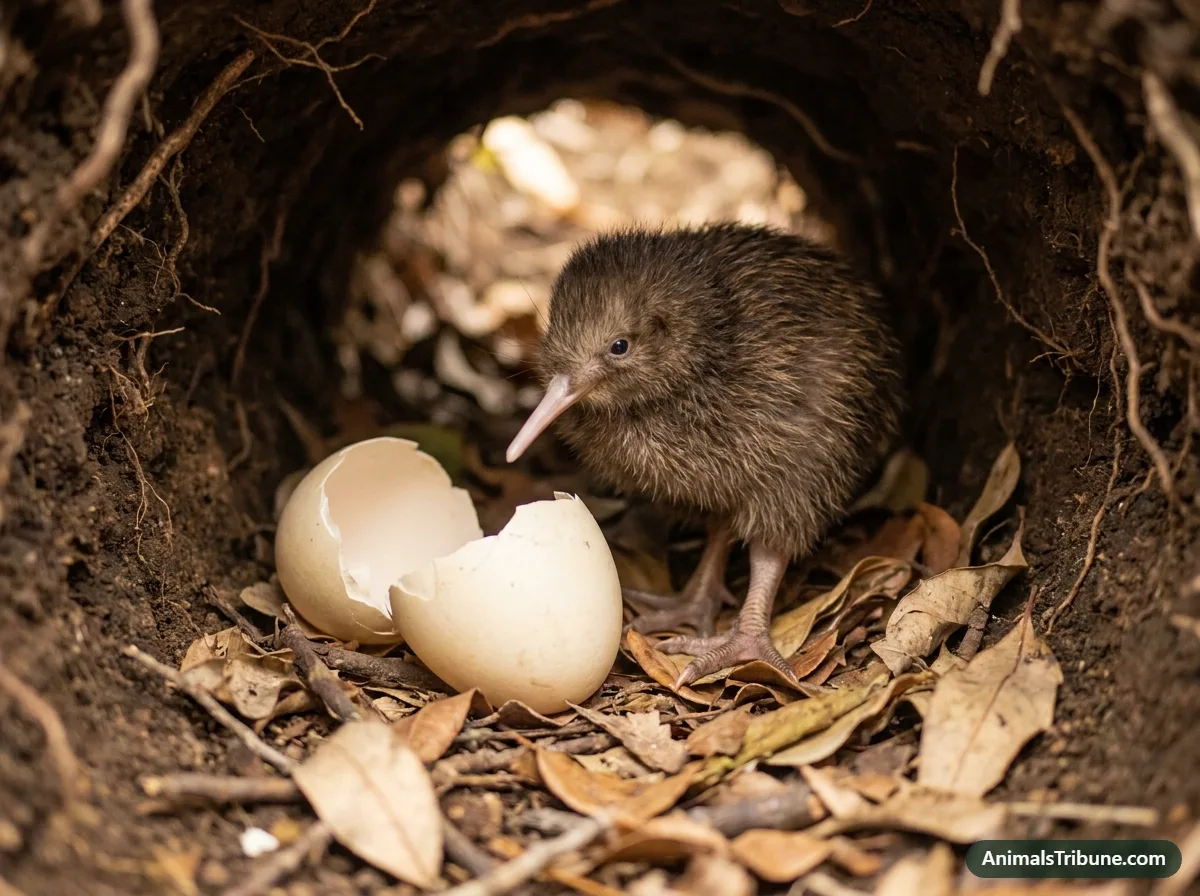
| Kiwi | Bird | New Zealand | Smells worms through its bill tip |
| Kakapo | Bird | New Zealand | Strong sense of smell, climbs trees |
| Nightjar | Bird | Worldwide except the coldest areas | Wide mouth catches insects in flight |
| Red-eyed tree frog | Amphibian | Central America | Big eyes, sticky toes |
| Common toad | Amphibian | Europe and western Asia | Hunts on damp nights |
| Moth | Insect | Worldwide | Feathery antennae smell mates |
| Firefly | Insect | Warm and temperate regions | Makes its own light |
| Scorpion | Arachnid | Deserts and warm regions | Senses vibrations through its legs |
| Source: typical ranges and behavior, our editors · Retrieved October 2026 | |||

How Nocturnal Animals Find Their Way in the Dark
Night animals solve the problem of darkness in different ways, and many combine several tricks.
- Big eyes and a mirror layer: cats, foxes, lorises and many others have a shiny layer behind the retina that bounces light back through the eye a second time. That is why their eyes glow in a flashlight beam.
- Super hearing: owls have a flat facial disk that funnels sound to their ears, and in many species one ear sits higher than the other, so they can pinpoint a mouse by sound alone.
- Echolocation: most bats send out high-pitched calls and listen for the echoes to find moths and mosquitoes in total darkness.
- Smell and touch: the kiwi sniffs for worms through nostrils at the tip of its bill, and the aardvark follows its nose to termite mounds.
- Tapping and listening: the aye-aye of Madagascar taps on branches with a long, thin middle finger, listens for hollow tunnels made by grubs, then gnaws in and hooks them out.
- Making light: fireflies flash glowing signals to find mates.

Nocturnal Mammals
Mammals make up the biggest share of the night shift. Many small ones, such as mice, opossums and hedgehogs, avoid daytime predators by staying hidden until dark. The Virginia opossum roams yards and woods across much of the US at night, and the striped skunk digs for grubs in lawns after sunset, trusting its smelly spray rather than speed.
- Night hunters: the leopard stalks antelope and monkeys in the dark and drags its kills into trees; the spotted hyena hunts in loud, whooping clans; and the ocelot prowls rainforest floors for rodents and birds.
- Tree dwellers: the kinkajou of Central and South America uses its grasping tail to hang from branches while it licks nectar and eats fruit, and the slow loris of Southeast Asia creeps along branches so slowly and quietly that insects never notice it coming.
- Diggers and grazers: the nine-banded armadillo noses through leaf litter for insects, and the hippopotamus leaves its river or lake at night to graze on grass, often walking several kilometers before dawn.


Nocturnal Birds, Amphibians and Insects
Owls are the most famous night birds. The tawny owl of Europe and the great horned owl of the Americas hunt mainly after dark, with soft-edged feathers that make their flight almost silent. Other night birds include nightjars and the common nighthawk, which catch insects in the air with wide gaping mouths; the potoo and tawny frogmouth, which spend the day pretending to be broken branches; the black-crowned night heron, which fishes at dusk and through the night; and the kakapo, a heavy, flightless night parrot of New Zealand.
Many frogs and toads are nocturnal too, because the night is cooler and damper and keeps their thin skin from drying out. The red-eyed tree frog sleeps by day with its bright colors tucked away and opens its startling red eyes at night. Scorpions hunt insects on desert nights, and their bodies glow blue-green under ultraviolet light.


Nocturnal Animals in Australia, India, South Africa and the UK
Australia has an unusually high number of night animals, partly because many of its marsupials avoid the daytime heat. The koala sleeps most of the day and feeds on eucalyptus leaves at night. The sugar glider glides between trees on skin flaps stretched from wrists to ankles, and the wombat, Tasmanian devil, quoll and bandicoot all come out after dark. The platypus hunts underwater at night and at dusk with its eyes shut, finding prey with electric sensors in its bill, while the grey-headed flying fox flies out at dusk to feed on blossom and fruit.
India is home to night hunters such as the Bengal tiger and the leopard, and to the shaggy sloth bear, which sucks termites out of their mounds after dark. The fishing cat scoops fish from wetlands at night, the slender loris climbs through forests of southern India and Sri Lanka, and the Asian palm civet eats fruit in trees, gardens and even roof spaces.
South Africa has some of the strangest night animals: the aardvark, the termite-eating aardwolf, the brown hyena of dry coasts and deserts, the bat-eared fox, the honey badger, the African civet, wild cats such as the caracal and serval, and the big-eyed bushbabies, or galagos, which leap between branches.
The UK has a smaller but much-loved night cast. The European badger leaves its underground sett at dusk, the red fox roams both countryside and city streets, and hedgehogs snuffle under garden hedges for beetles and slugs. The tawny owl hoots from woods and parks, the hazel dormouse climbs through hedgerows, and the common toad crawls out on damp evenings.
Nocturnal, Crepuscular or Diurnal? Animals People Often Mix Up
Not every animal you see at dusk is truly nocturnal. Rabbits, many deer and the red kangaroo are crepuscular: they feed mostly in the soft light of early morning and evening and rest through both the hottest part of the day and the darkest part of the night. Fireflies and many bats also start their busiest hours at twilight.
Some big cats sit in between. The lion can be active at any time, but in hot places most of its hunting happens after dark, when the cooler air lets it chase prey for longer. The tiger also hunts mainly at dusk and through the night. Scientists call animals that switch freely between day and night cathemeral. A useful rule of thumb: if an animal has huge eyes for its size, a shiny reflective layer in its eyes or very large ears, it probably does a lot of its living in the dark.
Why Are Some Animals Nocturnal?
There are three main reasons. First, safety: many small animals are hunted by daytime birds of prey, so coming out at night lowers the danger. Second, temperature: in deserts and hot savannas, the night is far cooler, so animals such as the fennec fox save water by sleeping through the heat in burrows. Third, food and competition: night hunters can catch prey that rests after dark, and night feeders avoid competing with daytime animals for the same flowers, fruit or insects.
Some animals are flexible. Lions and many deer can be active at any hour, and animals living near people, such as foxes and coyotes, often become more nocturnal to avoid humans. Our nocturnal animals for kids page explains the idea in simpler words, with a free activity sheet.
Nocturnal Animals on Our Site (30)
Each animal below has its own page with pictures, size, range and more facts. The order follows our list, from mammals to birds, amphibians and invertebrates.
 BatChiropteraEcholocating night fliers
 RaccoonProcyon lotorMasked night forager
 Red foxVulpes vulpesNight hunter of towns and fields
 Virginia opossumDidelphis virginianaNorth America's only marsupial
 HedgehogErinaceinaeSpiny garden visitor
 European badgerMeles melesSett-dwelling digger
 Striped skunkMephitis mephitisGrub-digging sprayer
 AardvarkOrycteropus aferTermite-eating digger
 Aye-ayeDaubentonia madagascariensisFinger-tapping lemur
 Slow lorisNycticebusSlow, silent climber
 KinkajouPotos flavusHoney bear of the rainforest
 LeopardPanthera pardusStealthy night hunter
 Spotted hyenaCrocuta crocutaWhooping clan hunter
 HippopotamusHippopotamus amphibiusGrazes on land at night
 KoalaPhascolarctos cinereusNight-feeding eucalyptus eater
 Sugar gliderPetaurus brevicepsGliding marsupial
 Tasmanian devilSarcophilus harrisiiNoisy night scavenger
 PlatypusOrnithorhynchus anatinusHunts with its bill sensors
 Sloth bearMelursus ursinusTermite-sucking bear of India
 Fennec foxVulpes zerdaBig-eared desert fox
 AardwolfProteles cristataTermite-eating hyena relative
 Fishing catPrionailurus viverrinusWetland cat that fishes
 Tawny owlStrix alucoHooting owl of Europe
 Great horned owlBubo virginianusTufted owl of the Americas
 KiwiApteryxFlightless night bird
 KakapoStrigops habroptilaFlightless night parrot
 Tawny frogmouthPodargus strigoidesBranch-mimicking night bird
 Red Eyed Tree FrogAgalychnis callidryasRed-eyed rainforest frog
 FireflyLampyridaeGlowing night beetle
 ScorpionScorpionesDesert night hunter
| Bat | Chiroptera | n/a | n/a | n/a |
|---|---|---|---|---|
| Raccoon | Procyon lotor | Procyonidae | n/a | Least Concern |
| Red fox | Vulpes vulpes | Canidae | n/a | Least Concern |
| Virginia opossum | Didelphis virginiana | Didelphidae | n/a | Least Concern |
| Hedgehog | Erinaceinae | Erinaceidae | n/a | n/a |
| European badger | Meles meles | Mustelidae | n/a | Least Concern |
| Striped skunk | Mephitis mephitis | Mephitidae | n/a | Least Concern |
| Aardvark | Orycteropus afer | Orycteropodidae | n/a | Least Concern |
| Aye-aye | Daubentonia madagascariensis | Daubentoniidae | 2.5 kg | Endangered |
| Slow loris | Nycticebus | Lorisidae | n/a | n/a |
| Kinkajou | Potos flavus | Procyonidae | n/a | Least Concern |
| Leopard | Panthera pardus | Felidae | n/a | Vulnerable |
| Spotted hyena | Crocuta crocuta | Hyaenidae | n/a | Least Concern |
| Hippopotamus | Hippopotamus amphibius | Hippopotamidae | n/a | Vulnerable |
| Koala | Phascolarctos cinereus | Phascolarctidae | n/a | Vulnerable |
| Sugar glider | Petaurus breviceps | Petauridae | n/a | Least Concern |
| Tasmanian devil | Sarcophilus harrisii | Dasyuridae | n/a | Endangered |
| Platypus | Ornithorhynchus anatinus | Ornithorhynchidae | n/a | Near Threatened |
| Sloth bear | Melursus ursinus | Ursidae | n/a | Vulnerable |
| Fennec fox | Vulpes zerda | Canidae | n/a | Least Concern |
| Aardwolf | Proteles cristata | Hyaenidae | 10 kg | Least Concern |
| Fishing cat | Prionailurus viverrinus | Felidae | n/a | Vulnerable |
| Tawny owl | Strix aluco | Strigidae | 426–524 g | Least Concern |
| Great horned owl | Bubo virginianus | Strigidae | n/a | Least Concern |
| Kiwi | Apteryx | Apterygidae | n/a | n/a |
| Kakapo | Strigops habroptila | Strigopidae | n/a | Critically Endangered |
| Tawny frogmouth | Podargus strigoides | Podargidae | n/a | Least Concern |
| Red Eyed Tree Frog | Agalychnis callidryas | Hylidae | n/a | Least Concern |
| Firefly | Lampyridae | Lampyridae | n/a | n/a |
| Scorpion | Scorpiones | n/a | n/a | n/a |
| Sources: Wikidata | ||||
Key Facts
- Nocturnal animals are active at night and rest during the day.
- Well over half of all mammal species are thought to be mainly nocturnal.
- Many night animals have a mirror layer in their eyes that makes them glow in a flashlight beam.
- Most bats find food in the dark using echolocation.
- The hippopotamus leaves the water at night to graze on grass.
- The platypus hunts with its eyes shut, using electric sensors in its bill.
Quick Quiz: How Well Do You Know the Nocturnal Animals?
5 questions. Tap an answer to check it.
What does nocturnal mean?
Nocturnal animals are active at night and rest by day.
How do most bats find insects in the dark?
Bats call and listen for the echoes.
Which large African animal grazes on land at night?
Hippos leave the water after dark to eat grass.
What does the aye-aye use to find grubs?
It taps on wood and listens for hollow tunnels.
Which of these is a nocturnal bird from New Zealand?
The flightless kiwi feeds at night, sniffing for worms.
Frequently Asked Questions
What are nocturnal animals?
Nocturnal animals are active mainly at night and sleep or rest during the day. Examples include owls, bats, raccoons, foxes, hedgehogs, aardvarks, koalas and moths.
What is a list of nocturnal animals?
A good list includes bats, owls, raccoons, red foxes, opossums, hedgehogs, badgers, skunks, aardvarks, aye-ayes, slow lorises, kinkajous, leopards, hyenas, koalas, sugar gliders, wombats, kiwis, red-eyed tree frogs, toads, moths, fireflies and scorpions.
What nocturnal mammals are there?
Nocturnal mammals include most bats, raccoons, opossums, hedgehogs, badgers, skunks, aardvarks, aye-ayes, lorises, kinkajous, leopards, spotted hyenas, hippos (which graze at night), koalas, sugar gliders and Tasmanian devils.
What nocturnal animals live in Australia?
Australian night animals include the koala, sugar glider, wombat, Tasmanian devil, quoll, bandicoot, platypus, tawny frogmouth and flying foxes such as the grey-headed flying fox.
What nocturnal animals live in India?
India's night animals include the Bengal tiger, leopard, sloth bear, fishing cat, slender loris, Asian palm civet, many owls and many kinds of bats.
What nocturnal animals live in South Africa?
South Africa's night animals include the aardvark, aardwolf, brown and spotted hyenas, bat-eared fox, honey badger, African civet, caracal, serval, bushbabies (galagos) and the hippopotamus.
What nocturnal animals live in the UK?
In the UK, the main nocturnal animals are the European badger, red fox, hedgehog, tawny owl, hazel dormouse, bats, moths and the common toad.
Why do some animals come out at night?
Night helps them avoid daytime predators, escape hot temperatures and find food with less competition. Their senses, such as big eyes, sharp hearing, smell or echolocation, are suited to darkness.


