
At a Glance
Mammals (class Mammalia) are vertebrates that make milk for their young, grow hair at some stage of life, and keep a steady body temperature from the inside. Scientists recognize more than 6,000 living species in roughly 27 orders. Rodents make up about two in five of them and bats about one in five.
- Scientific name
- Mammalia
- Known species
- More than 6,000 living species
- Orders
- About 27
- Biggest group
- Rodents, about 2 in 5 species
- Body temperature
- Warm-blooded (made inside the body)
- Largest
- Blue whale
- Smallest by weight
- Etruscan shrew

On this page
What Is a Mammal?
A mammal is a backboned animal that nurses its young with milk made in special skin glands. That single trait gave the class its name, from the Latin word for breast, and it is shared by every species from mice to blue whales. Even the platypus, which lays eggs, feeds its babies milk that seeps from patches on the mother's belly.
Hair is the second giveaway. Most mammals wear a full coat of fur, but even dolphins are born with a few whiskers, and the spines of a hedgehog are hairs hardened into quills. Mammals are also warm-blooded: they burn food to hold their body at a steady temperature, which lets them stay active in cold nights, polar seas and snowy mountains.
Skeletons hold quieter clues. Mammals have three tiny bones in each middle ear, a lower jaw made of a single bone on each side, and, in most species, teeth of different shapes for cutting, tearing and grinding. Our guide to the characteristics of mammals walks through each feature.


Mammals on This Page in Numbers
| Animals on this page | 24 |
|---|---|
| Class | Mammalia (mammals) |
| Orders | 8 |
| Families | 21 |
| Conservation status labels | Least Concern: 9, Vulnerable: 6, Endangered: 5, Near Threatened: 1 |
Sources: Wikidata
What Are the Main Groups of Mammals?
Biologists sort living mammals into three big branches based on how their young develop.
- Monotremes lay eggs. Only five species survive: the platypus and four kinds of echidna, all in Australia and New Guinea.
- Marsupials give birth to tiny, underdeveloped young that finish growing attached to a nipple, often inside a pouch. Koalas, kangaroos, wombats and the American opossum belong here.
- Placental mammals nourish the baby inside the mother through a placenta until it is well formed. This branch holds the vast majority of species, people included.
Within those branches, mammals are split into orders. The table below lists the largest and best-known ones, with an example for each.
| Order | Common name | What sets them apart | Example |
|---|---|---|---|
| Rodentia | Rodents | Ever-growing front teeth; about 2 in 5 mammal species | Capybara |
| Chiroptera | Bats | The only mammals that truly fly; about 1 in 5 species | Little brown bat |
| Eulipotyphla | Shrews, moles, hedgehogs | Small insect eaters with long snouts | Etruscan shrew |
| Primates | Primates | Grasping hands, forward-facing eyes, large brains | Chimpanzee |
| Carnivora | Carnivores | Sharp cutting cheek teeth; cats, dogs, bears, seals | Lion |
| Artiodactyla | Even-toed hoofed mammals and whales | Two or four toes per foot, or flippers in whales | Moose |
| Perissodactyla | Odd-toed hoofed mammals | One or three main toes; horses, rhinos, tapirs | Horse |
| Lagomorpha | Rabbits, hares, pikas | Two pairs of upper front teeth | Snowshoe hare |
| Diprotodontia | Kangaroos, koalas, wombats | Pouched mammals with two big lower front teeth | Koala |
| Proboscidea | Elephants | A trunk and tusks; the largest land animals | African elephant |
| Sirenia | Manatees and dugongs | Slow, plant-eating sea and river mammals | West Indian manatee |
| Monotremata | Monotremes | Lay eggs but feed young on milk | Platypus |
| Source: Order names follow current mammal taxonomy; species shares are rounded, widely cited estimates · Retrieved October 2026 | |||


How Do Mammals Live?
Mammals have spread into almost every habitat on the planet. Bats took to the air and hunt insects by echolocation. Whales, dolphins and manatees returned to the water and traded legs for flippers. Moles dig tunnels, squirrels climb, and the polar bear walks across sea ice for months.
Diets vary as much as body shapes. Grazers such as horses and giraffes live on plants, hunters such as the lion and wolf eat meat, and many species, from raccoons to bears, eat a bit of everything. Our guide to herbivores, carnivores and omnivores explains the difference.
Social life ranges from loners like the snow leopard to tight family groups. Meerkats post lookouts, wolves hunt in packs, and chimpanzees use sticks and stones as tools.


How Do Mammals Raise Their Young?
Milk shapes how mammals grow up. Because babies rely on their mother for food, mammals usually have fewer young than fish or frogs and invest much more care in each one. A mouse may raise several litters of pups a year, while an elephant carries a single calf for close to two years before birth and then nurses it for several more.
Some newborns can run within hours. A giraffe calf drops about two meters at birth and stands soon after, because staying still on the savanna is dangerous. Others, like kittens and puppies, are born blind and helpless and need weeks in a den. A kangaroo joey is born about the size of a jelly bean and crawls into the pouch to finish developing.
Long childhoods give young mammals time to learn. Otters teach pups to dive, orcas pass on hunting tricks within their pods, and young primates copy what older group members do.
What Are the Biggest and Smallest Mammals?
The blue whale is the largest mammal and the heaviest animal known to have lived, bigger than any dinosaur. On land the record goes to the African elephant, while the giraffe is the tallest. The sperm whale has the largest brain of any animal.
At the small end, the Etruscan shrew weighs about as much as a paper clip or two and has to eat almost constantly to fuel its racing heartbeat. A tiny bat from Thailand and Myanmar, sometimes called the bumblebee bat, is a rival for the title when length rather than weight is measured.
For speed, the cheetah is the fastest sprinter, and the pronghorn of the American West can hold a high speed for much longer. Compare more record holders on our lists of the largest mammals, smallest mammals and fastest mammals.
Which Mammals Live Near You?
North America is home to a wide range of wild mammals, from beavers and muskrats in wetlands to moose in northern forests, bobcats in brushy hills and sea otters along the Pacific coast. Many live closer than people think: opossums, red foxes and raccoons are regular visitors to suburbs and city parks.
Our state pages show which animals have been recorded where you live, based on open wildlife records. Start with animals in Texas, animals in Florida, animals in California, animals in New York or animals in Alaska, or browse all of them on our states page.
Are Mammals Endangered?
A large share of mammal species face some risk of extinction. The main pressures are loss of forests and grasslands to farming and building, hunting and poaching, and climate change. Big animals that breed slowly, such as rhinos, great apes and large cats, are hit hardest because their numbers recover so slowly.
The vaquita, a small porpoise found only in the northern Gulf of California, is among the rarest mammals on Earth, with only a handful left. The Amur leopard and the Sumatran tiger also survive in small numbers.
There are success stories too. Protection has helped many whale populations grow again, and in North America the bison recovered from near extinction to herds on public and tribal lands. See which species need help most on our endangered animals list.
Popular Mammals (24)
These are the mammals readers look up most, from big cats and whales to the platypus and the muskrat. Each card opens a full page with size, range map, diet, fun facts and a quiz.
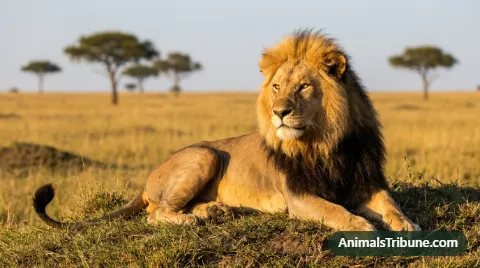 LionPanthera leoThe only cat that lives in family groups
 TigerPanthera tigrisThe largest wild cat
 CheetahAcinonyx jubatusThe fastest land animal over a short sprint
 Polar bearUrsus maritimusSea-ice hunter of the Arctic
 WolfCanis lupusPack hunter and ancestor of the dog
 MooseAlces alcesThe largest member of the deer family
 African elephantLoxodontaThe largest land animal
 GiraffeGiraffaThe tallest animal on Earth
 OkapiOkapia johnstoniStriped forest relative of the giraffe
 Blue whaleBalaenoptera musculusThe heaviest animal that has ever lived
 Sperm whalePhyseter macrocephalusDeep diver with the largest brain
 NarwhalMonodon monocerosArctic whale with a long spiral tusk
 Bottlenose dolphinTursiopsSmart, social ocean hunter
 WalrusOdobenus rosmarusTusked giant of Arctic coasts
 Sea otterEnhydra lutrisUses stones to crack open shellfish
 CapybaraHydrochoerus hydrochaerisThe largest rodent in the world
 MuskratOndatra zibethicusMarsh rodent that builds cattail lodges
 MeerkatSuricata suricattaDesert mongoose that posts lookouts
 KoalaPhascolarctos cinereusEucalyptus-eating marsupial
 Red kangarooOsphranter rufusThe largest marsupial
 PlatypusOrnithorhynchus anatinusEgg-laying mammal with a duck-like bill
 ChimpanzeePan troglodytesTool-using great ape
 RaccoonProcyon lotorClever omnivore of towns and forests
 Etruscan shrewSuncus etruscusThe lightest mammal by weight
| Lion | Panthera leo | Felidae | n/a | 126–188 kg | Vulnerable |
|---|---|---|---|---|---|
| Tiger | Panthera tigris | Felidae | n/a | 120–180 kg | Endangered |
| Cheetah | Acinonyx jubatus | Felidae | n/a | 35–40.2 kg | Vulnerable |
| Polar bear | Ursus maritimus | Ursidae | n/a | 450 kg | Vulnerable |
| Wolf | Canis lupus | Canidae | n/a | n/a | Least Concern |
| Moose | Alces alces | Cervidae | n/a | n/a | Least Concern |
| African elephant | Loxodonta | Elephantidae | n/a | n/a | n/a |
| Giraffe | Giraffa | Giraffidae | n/a | n/a | n/a |
| Okapi | Okapia johnstoni | Giraffidae | n/a | 250 kg | Endangered |
| Blue whale | Balaenoptera musculus | Balaenopteridae | 27.1 m | n/a | Endangered |
| Sperm whale | Physeter macrocephalus | Physeteridae | n/a | n/a | Vulnerable |
| Narwhal | Monodon monoceros | Monodontidae | n/a | n/a | Least Concern |
| Bottlenose dolphin | Tursiops | Delphinidae | n/a | n/a | n/a |
| Walrus | Odobenus rosmarus | Odobenidae | n/a | n/a | Vulnerable |
| Sea otter | Enhydra lutris | Mustelidae | 1.4–1.48 m | 32.5–45 kg | Endangered |
| Capybara | Hydrochoerus hydrochaeris | Caviidae | n/a | 48.9 kg | Least Concern |
| Muskrat | Ondatra zibethicus | Cricetidae | n/a | n/a | Least Concern |
| Meerkat | Suricata suricatta | Herpestidae | n/a | 725 g | Least Concern |
| Koala | Phascolarctos cinereus | Phascolarctidae | n/a | n/a | Vulnerable |
| Red kangaroo | Osphranter rufus | Macropodidae | n/a | n/a | Least Concern |
| Platypus | Ornithorhynchus anatinus | Ornithorhynchidae | n/a | n/a | Near Threatened |
| Chimpanzee | Pan troglodytes | Hominidae | n/a | n/a | Endangered |
| Raccoon | Procyon lotor | Procyonidae | n/a | n/a | Least Concern |
| Etruscan shrew | Suncus etruscus | Soricidae | n/a | n/a | Least Concern |
| Sources: Wikidata | |||||
Mammals by US State
Key Facts
- Mammals are warm-blooded vertebrates that grow hair and feed their young on milk.
- More than 6,000 living mammal species are known, sorted into about 27 orders.
- Rodents make up about two in five mammal species and bats about one in five.
- Monotremes lay eggs, marsupials raise tiny young in a pouch, and placental mammals grow young inside the body.
- The blue whale is the largest mammal; the Etruscan shrew is the lightest.
- Bats are the only mammals capable of true powered flight.
- Many large mammals, from rhinos to great apes, are threatened by habitat loss and hunting.
Quick Quiz: How Well Do You Know the Mammals?
6 questions. Tap an answer to check it.
Which feature do all mammals share?
Every mammal, even the egg-laying platypus, nurses its young with milk.
Which order contains the most mammal species?
Rodents make up about two in five mammal species.
Which mammal lays eggs?
The platypus and the echidnas are the only egg-laying mammals.
What is the largest mammal that has ever lived?
The blue whale is heavier than any known dinosaur or other animal.
Which mammals can truly fly?
Flying squirrels and colugos glide; only bats flap their wings and fly.
Where does a newborn kangaroo finish growing?
A tiny joey crawls into the pouch and attaches to a nipple to keep growing.
Frequently Asked Questions
What makes an animal a mammal?
A mammal is a vertebrate that feeds its young on milk, has hair at some point in its life and keeps a steady body temperature from the inside. Mammals also share skeleton features such as three small middle-ear bones and a lower jaw made of a single bone on each side.
Is a whale a mammal?
Yes. Whales and dolphins breathe air with lungs through a blowhole, give birth to live young, nurse their calves on milk and are born with a few hairs on the snout. They look like fish because they evolved a streamlined shape for life in water, but they are mammals.
Are bats mammals or birds?
Bats are mammals. They have fur, give birth to live young and nurse them on milk. Their wings are thin skin stretched over very long finger bones, not feathers. Bats are the only mammals that can truly fly, and they form one of the largest mammal orders.
Which mammals lay eggs?
Only the monotremes: the platypus and four species of echidna, all living in Australia and New Guinea. Their eggs have leathery shells and hatch after about ten days. The young then drink milk that oozes from patches of skin on the mother, since monotremes have no nipples.
What is the largest mammal?
The blue whale is the largest mammal and the heaviest animal known to have existed. On land, the African bush elephant is the largest, and the giraffe is the tallest. Among living rodents, the South American capybara is the biggest.
What is the smallest mammal?
By weight, the Etruscan shrew is usually named the smallest mammal, with adults lighter than two paper clips. A tiny bat from Thailand and Myanmar, often called the bumblebee bat, is a close rival and may be the smallest by skull and body length.
Are humans mammals?
Yes. People are placental mammals in the primate order, along with apes, monkeys and lemurs. Like other mammals, humans have hair, are warm-blooded, give birth to live young and feed babies with milk.
How many mammal species are there?
Scientists recognize more than 6,000 living mammal species, and the total rises a little each year as new species are described, mostly small rodents, bats and shrews. That is far fewer than the number of bird or fish species.


